Is the guy at my door with leftover sealer legitimate?
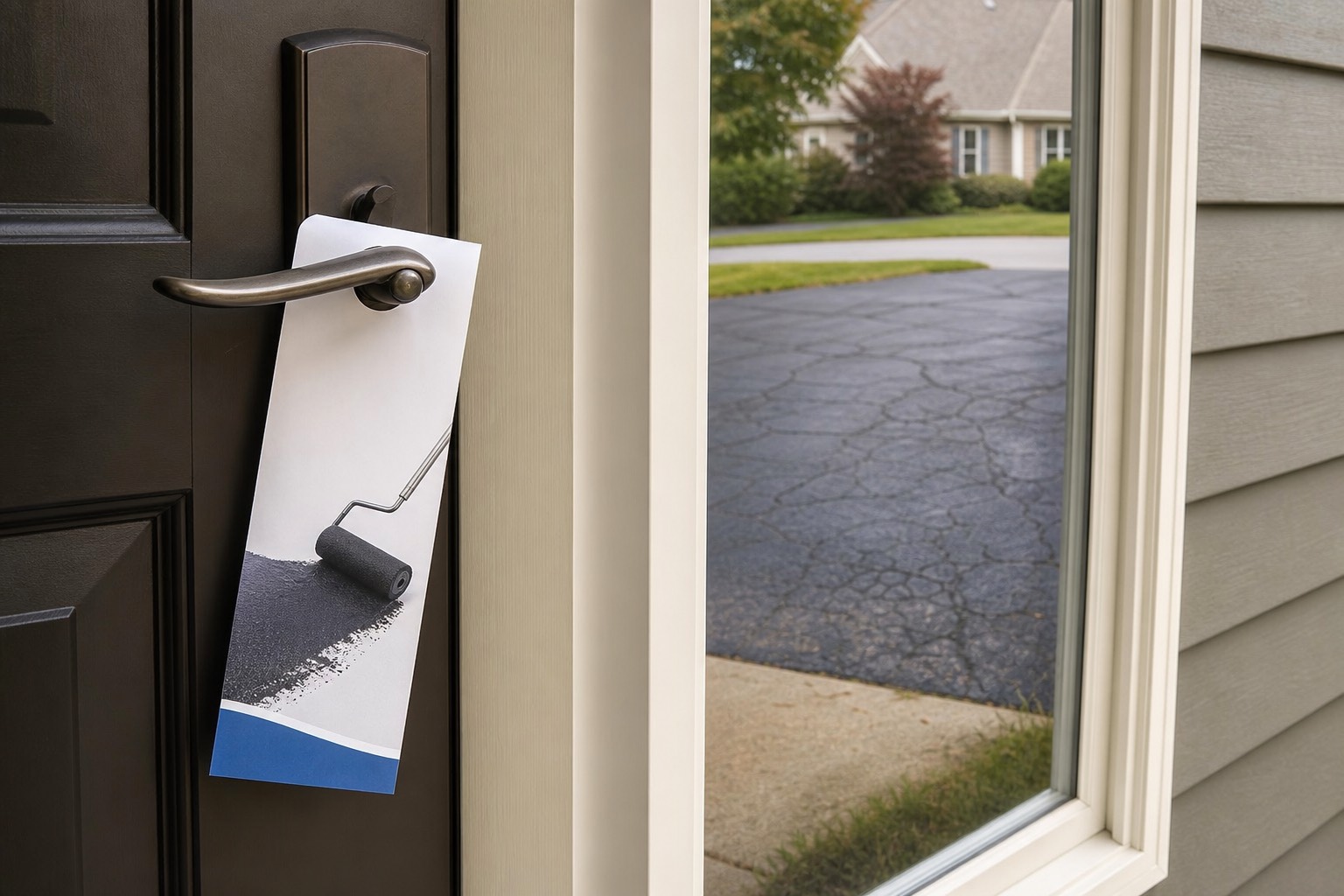
Treat the story as a warning, not a bargain. The pitch is remarkably consistent: a person says a nearby job ended with extra material, offers a today-only price, and wants an immediate yes. Consumer Reports warned about drive-by sealcoating scams in 2006 and advised homeowners to be skeptical when the material is not being actively mixed. A legitimate proposal does not depend on a stranger's convenient surplus.
A responsible quote identifies the pavement area, cleaning, vegetation and edge work, crack treatment, patch exclusions, sealer chemistry, application method, number of coats, weather rule, traffic closure, total price, and who is actually doing the job. We arrange a scheduled review so you can compare that written scope. The crew we send should be able to answer those questions before material touches the driveway.
Does sealcoating actually protect asphalt, or just make it black?
Both descriptions contain part of the truth. A compatible sealer can slow surface oxidation, reduce direct exposure to sun and water, and make a sound asphalt surface more uniform. It does not rebuild compacted base, restore lost aggregate, level ruts, close potholes, or turn alligator cracking into healthy pavement. On a failing driveway, the black color may be the most obvious result while the structural problem continues underneath.
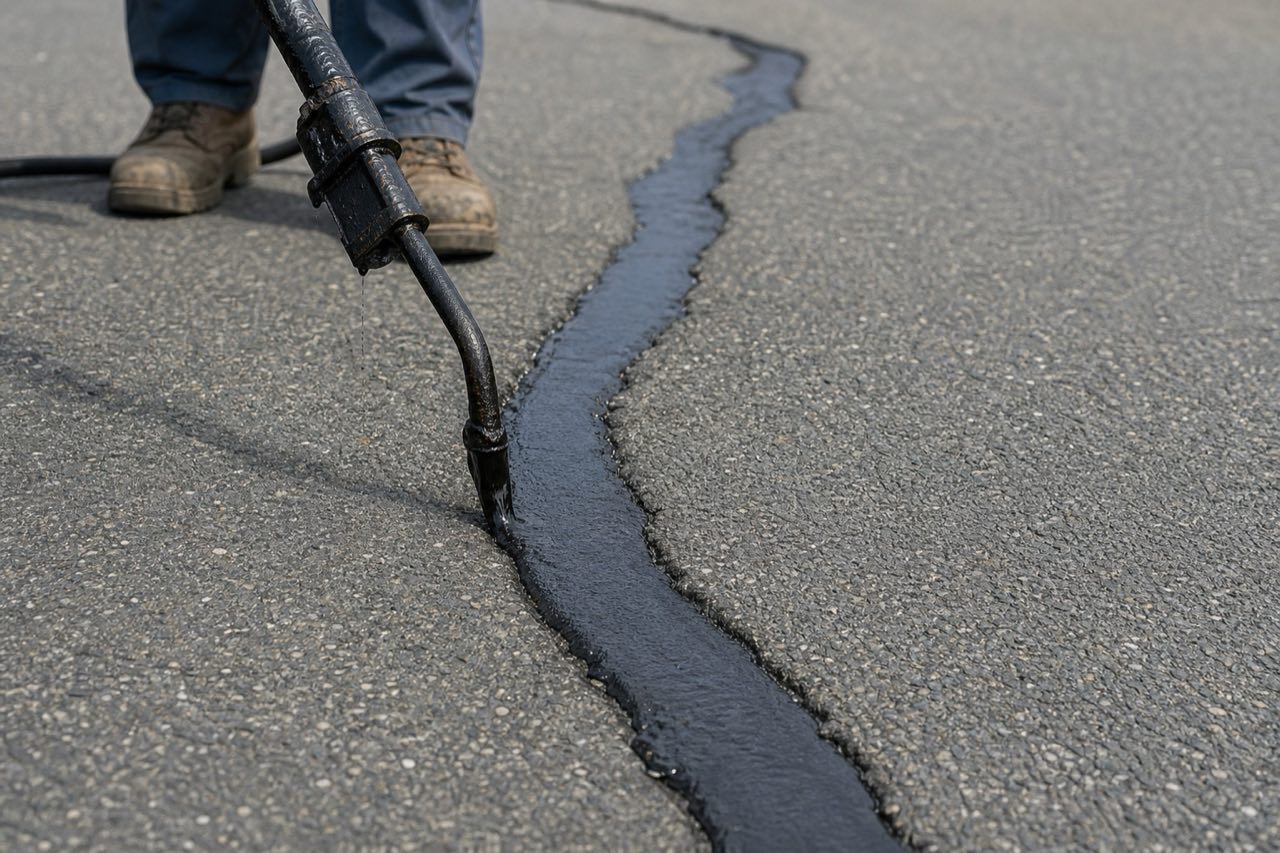
Our position is simple: crack treatment and drainage decisions usually matter more than the black coating. Water entering an open crack can reach layers that sealcoat never touches. In the Piedmont, winter temperatures can cross 32°F, so water in a crack can widen damage through freeze-thaw movement. Filling suitable working cracks before coating is not an optional cosmetic upgrade; it is the maintenance step worth discussing first.
How often should a High Point driveway really be sealed?
For sound asphalt that benefits from sealing, a 2–3 year cadence is a reasonable inspection point, not an automatic subscription. Annual coating can build a slick, brittle surface and is a red flag when no one has inspected wear. New asphalt also needs time to cure: published trade guidance ranges from about 90 days to 6–12 months. A matte, weathered surface is a better candidate than fresh, oily-looking pavement.
Skip or defer sealing when the asphalt is very new, when the previous coat remains intact, when widespread cracking shows base movement, or when patching or repaving will soon replace the surface. Seal when the pavement is structurally sound, the existing coat has weathered, cracks and localized failures can be treated first, and a dry April–October weather window supports the product's temperature and cure requirements.
What does a legitimate sealcoating job include?
The sequence starts with measurement and condition review. Dirt, loose aggregate, weeds, grass edges, pollen, and incompatible residue must be removed. Oil-softened asphalt may need repair rather than a stronger detergent. Suitable cracks are cleaned and filled; potholes, broken edges, depressions, and alligator cracking are separated into a patch or paving scope instead of being painted black and hidden.
Only then should the crew apply the specified product at the manufacturer's coverage rate, using the agreed spray, brush, or squeegee method and coat count. The forecast should keep pavement and air above the product minimum—often at least 50°F—and avoid rain for 24 hours or more. Published guidance commonly keeps vehicles off for 24–48 hours; shade, humidity, coat thickness, and temperature can require longer.
What should a High Point sealcoating quote cost?
National July 2026 cost guides disagree, which is exactly why the scope matters. Published bands include roughly $0.20–$0.65 per square foot for standard sealing, while HomeGuide publishes higher installed figures in some markets and driveway totals commonly measured in hundreds of dollars. Commercial references cluster around about $0.14–$0.50 per square foot before unusual repair, access, or striping needs. These are comparison ranges, not High Point prices.
Square footage is only the first driver. Minimum trip charges, crack density, hand edging, cleaning, oil spots, patching, product, solids content, 1 versus 2 coats, traffic control, striping, and phased reopening can move the total. The written quote comes from the vendor after review. A suspiciously cheap bid often removes labor invisibly: little preparation, diluted material, or 1 thin spray pass described as a complete system.
How do we help you make the next decision?
Call or send the form with the property city, approximate pavement dimensions, age if known, last sealing date, crack and pothole condition, photos, access limits, and preferred timing. We schedule the conversation around the actual surface rather than forcing every caller into the same coating package. For a parking lot, add business hours, delivery routes, fire lanes, accessible spaces, and the maximum closure each tenant can tolerate.
High Point's twice-yearly furnishings Market brings roughly 2,000 exhibitors and 70,000–80,000 attendees through about 11 million square feet of showroom space. A commercial lot serving that cycle needs to be repaired, coated, striped, cured, and fully open before setup traffic arrives, with a weather fallback rather than a Market-week application gamble.
The useful outcome may be sealing, crack filling, a patch, phased maintenance, repaving, or waiting. We would rather help you ask the right question than sell black color as a cure for every asphalt problem. Start with the worth-it and cost guides if you are still deciding; use a service or city page when the work type is already clear.