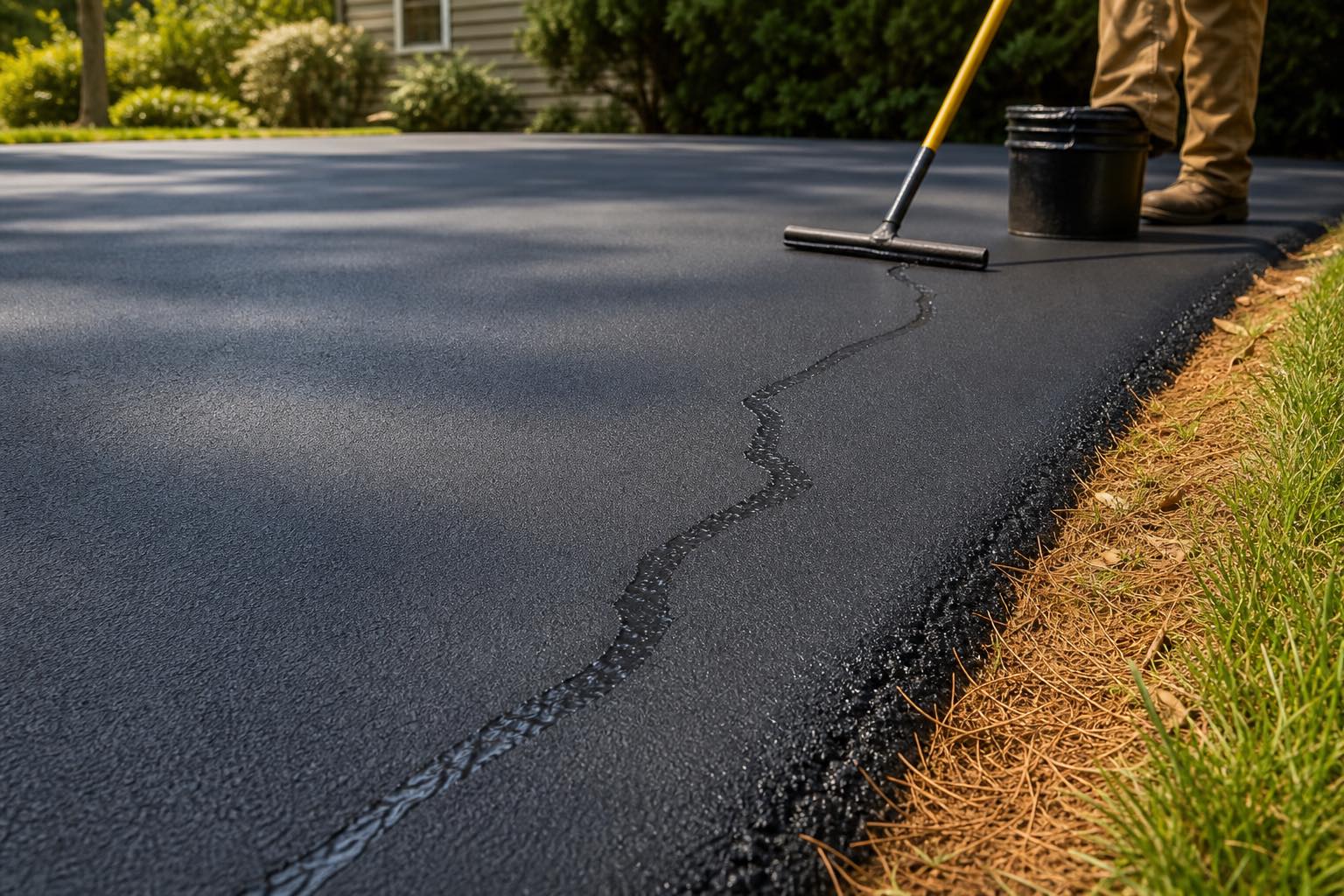
What separates a full-depth patch from a surface patch?
A surface patch removes and replaces only the upper asphalt layer where support below remains sound. A full-depth patch removes asphalt and failed base to a stable depth, rebuilds support, and replaces the pavement section. Throw-and-roll cold patch can make a pothole safer temporarily, but it should not be priced or described as the same construction as a saw-cut hot-mix repair.
The quote should show length, width, approximate depth, saw-cut perimeter, removal and disposal, base allowance, stone type, lift thickness, asphalt mix, tack or edge treatment, compaction equipment, final grade, drainage tie-in, and traffic return. Unknown base conditions can be a written allowance with unit pricing rather than a surprise change after excavation.
How should drainage change a patch decision?
Standing water, a low inlet, roof discharge, eroded shoulder, broken curb, or water emerging through cracks can defeat a patch. The repaired surface should shed water without creating a new pond or directing runoff toward a building. If the cause lies outside the patch—such as a pipe, catch basin, subdrain, or grading issue—the right scope may need another trade or a larger design.
Document the area after rainfall, not only on a dry estimate day. Mark the water line, direction of flow, soft edges, and repeated freeze-thaw breakup. The fact pack does not verify a universal red-clay failure claim for every Triad property, so decisions should come from site evidence rather than a regional soil slogan.
What does asphalt patching cost in July 2026?
Repair guides price patches by square foot, ton, or job minimum, and published totals vary widely with depth. The July 2026 fact pack does not establish a reliable High Point unit rate, so we do not invent one. Use the national crack-filling and sealing figures only for those scopes; a structural patch has excavation, material, hauling, and compaction that a coating price cannot represent.
Ask for the measured patch area and assumed depth, plus unit prices for extra undercut, stone, asphalt, disposal, traffic control, and mobilization. A small residential repair often carries a minimum charge; a commercial project can gain unit efficiency but add phasing and night work. The vendor supplies the written price after the failure boundary is marked.
What should happen from estimate through reopening?
The crew marks the repair beyond unstable edges, saw-cuts a clean perimeter, removes pavement and unsuitable base, documents hidden water or utility conditions, rebuilds and compacts support, applies tack where specified, places hot mix in suitable lifts, compacts the surface and edges, checks grade, protects the patch from traffic, and records any revised quantity.
Weather belongs in the work order. Many sealcoat products call for pavement and air temperatures of at least 50°F with temperatures staying above the minimum during cure, no rain for 24 hours or more, and warmer conditions for dependable drying. Crack and patch materials have their own rules. The vendor should confirm the named product, forecast threshold, postponement decision, and reopening time for the actual date.
What if the pavement reveals a different problem?
A patch that sinks, cracks around its perimeter, ponds water, ravels, or shoves under turning traffic is giving diagnostic information. Settlement points toward support or compaction; edge cracking can reflect a weak transition; raveling can involve mix, temperature, or compaction; recurring wet failure demands drainage review. Diagnose the pattern before adding sealcoat over it.
Changes should be explicit. The crew should photograph the condition, explain why it falls outside the agreed scope, state the added quantity or alternate treatment, and obtain authorization before proceeding. You may choose the revision, defer that zone, or request another opinion. A surprise beneath dirt is possible; a blank permission slip for unlimited added work is not necessary.
How should you compare written proposals?
Compare patch bids by footprint, depth, removal method, base allowance, lift and mix, compaction equipment, edge and tack treatment, grade, hauling, traffic return, exclusions, and change units. Ask whether the proposal is temporary, surface, or full-depth. Those three labels can describe very different cost and expected service.
Confirm the actual provider before approval. North Carolina's general-contractor threshold under N.C.G.S. §87-1 is $40,000 for covered projects, so a typical residential sealing price does not prove or disprove qualification by itself. Property rules, scope, and other trades can create different requirements. Verify identity, insurance required by you or the property, references when available, payment terms, and responsibility for the proposed work.