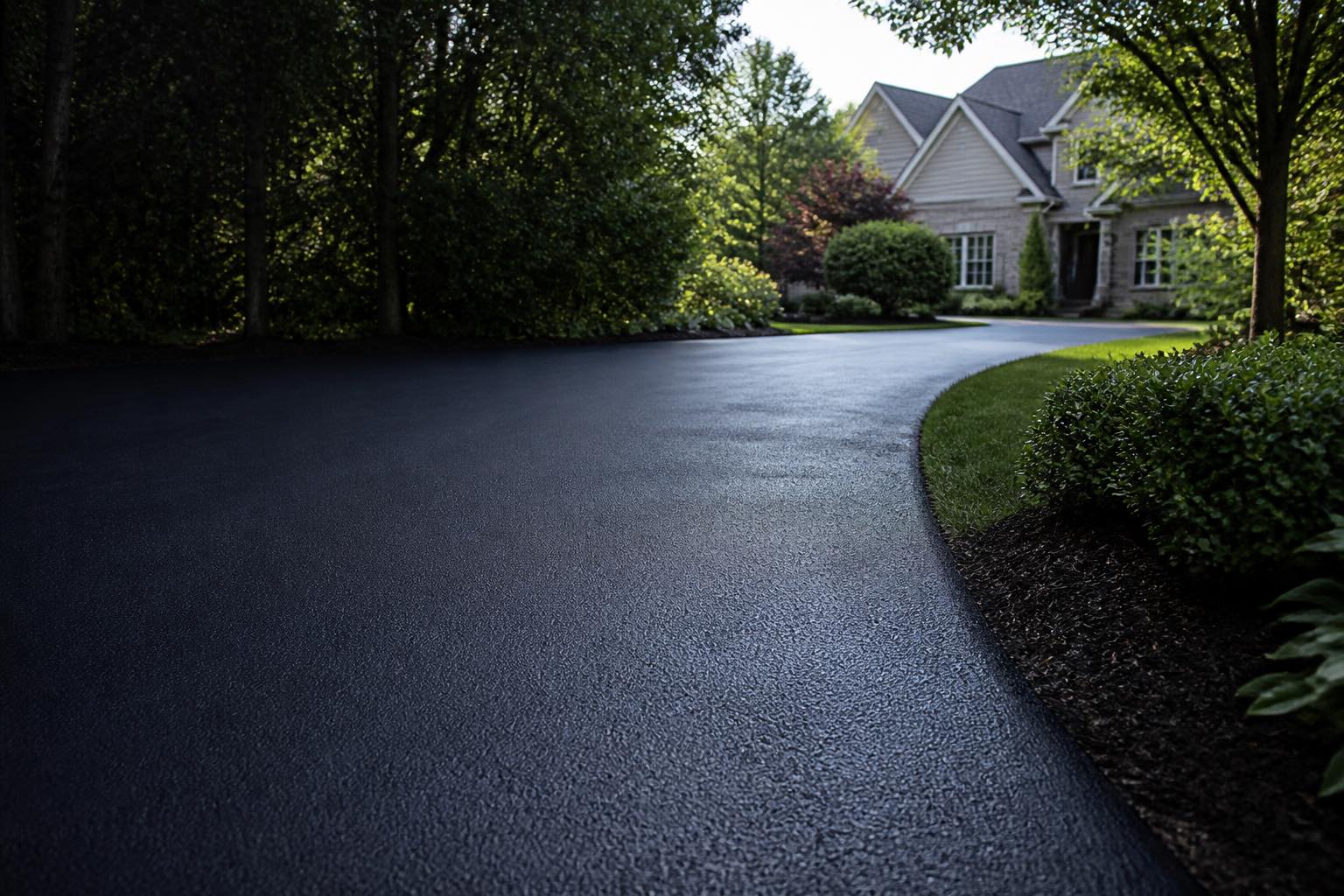
What preparation belongs in a driveway quote?
The crew should measure the asphalt, inspect cracks and failed areas, cut or pull vegetation from the edge, remove loose aggregate and dirt, clean pollen and organic debris, and address oil-contaminated spots. A pressure washer is not automatically the answer: the surface must be dry, and aggressive washing can drive water into cracks or damage weak asphalt if timing and technique are poor.
Cracks suitable for treatment should be cleaned so the material bonds to asphalt rather than dust. Broken edges, deep depressions, potholes, and alligator cracking need a separate repair decision. Protect garage doors, concrete, pavers, curbs, siding, and planted edges from overspray or splatter. Put those boundaries in the quote instead of assuming cleanup will solve them later.
Which sealer and application method should you ask for?
Ask for the material family by name. USGS documents major PAH concerns with coal-tar-based sealcoat; asphalt emulsion has substantially lower PAH content. We prefer to arrange asphalt-emulsion work, but the vendor must confirm the product, mix, coverage rate, aggregate or additives, and manufacturer requirements for the actual driveway.
Spray can place a controlled uniform coat quickly; brush or squeegee methods can work material into textured surfaces and edges. Neither tool proves thickness or quality. Coverage rate, solids, dilution, surface condition, coat count, and technique matter together. If 2 coats are proposed, ask whether they are separate properly dried applications rather than 2 quick passes sold as a phrase.
What does driveway sealing cost in July 2026?
National guides show a broad range. Common published bands run about $0.20–$0.65 per square foot for standard sealing, while HomeGuide reports higher installed figures and typical small-driveway totals in the hundreds of dollars. One competitor menu in Ohio published $250–$395 per 1,000 square feet. None of these figures is a verified High Point rate.
Expect minimum charges to dominate a small driveway. Size, crack length, edging, cleaning, oil treatment, patching, hand work, material, 1 or 2 coats, steepness, shade, travel, and access move the total. The vendor provides the written quote after review. Compare the area, preparation, crack work, product, application rate, coats, closure, and exclusions—not just the final number.
What should happen from estimate through reopening?
After measurement and condition review, the crew the provider sends should separate repair areas, clean the surface, treat approved cracks, protect adjoining materials, mix the named sealer, apply at the specified rate, block traffic, and give a weather-dependent reopening time. You should know before arrival whether vehicles can be moved for 24–48 hours or longer.
Weather belongs in the work order. Many sealcoat products call for pavement and air temperatures of at least 50°F with temperatures staying above the minimum during cure, no rain for 24 hours or more, and warmer conditions for dependable drying. Crack and patch materials have their own rules. The vendor should confirm the named product, forecast threshold, postponement decision, and reopening time for the actual date.
What if the pavement reveals a different problem?
If cleaning exposes loose aggregate, saturated oil damage, soft spots, edge collapse, or connected cracking, stop and revise the scope. A black coat can hide the visual warning without changing the cause. Ask for patch dimensions, removal depth, base observations, compaction, drainage implications, and the cost of deferring repair before choosing a cosmetic-only result.
Changes should be explicit. The crew should photograph the condition, explain why it falls outside the agreed scope, state the added quantity or alternate treatment, and obtain authorization before proceeding. You may choose the revision, defer that zone, or request another opinion. A surprise beneath dirt is possible; a blank permission slip for unlimited added work is not necessary.
How should you compare written proposals?
A credible driveway proposal names the provider, measured area, crack quantity or allowance, patch exclusions, product family, dilution or mix instructions, application method, coverage rate, coat count, temperature and rain thresholds, protection of adjacent surfaces, closure time, price, payment terms, and change approval. Reject a same-day cash story that cannot supply those basics.
Confirm the actual provider before approval. North Carolina's general-contractor threshold under N.C.G.S. §87-1 is $40,000 for covered projects, so a typical residential sealing price does not prove or disprove qualification by itself. Property rules, scope, and other trades can create different requirements. Verify identity, insurance required by you or the property, references when available, payment terms, and responsibility for the proposed work.