How do you turn a walk-through into a capital plan?
Divide the property into named zones and rate cracking, raveling, oxidation, patches, potholes, rutting, settlement, drainage, curbs, loading areas, dumpster approaches, fire lanes, accessible routes, and markings. Add area, traffic type, prior work, photographs, consequence of failure, recommended treatment, budget band, and target year. A consistent inventory lets next year's inspection show movement rather than restart the argument.
Prioritize hazards and active water first, structural repair second, crack and surface preservation third, and appearance work where it supports operations. A black uniform coat can improve presentation, but it should not move a settled accessible aisle or failing truck lane below a cosmetic zone. Lifecycle value comes from preventing avoidable deterioration without delaying inevitable reconstruction indefinitely.
How should occupied-lot phasing be written?
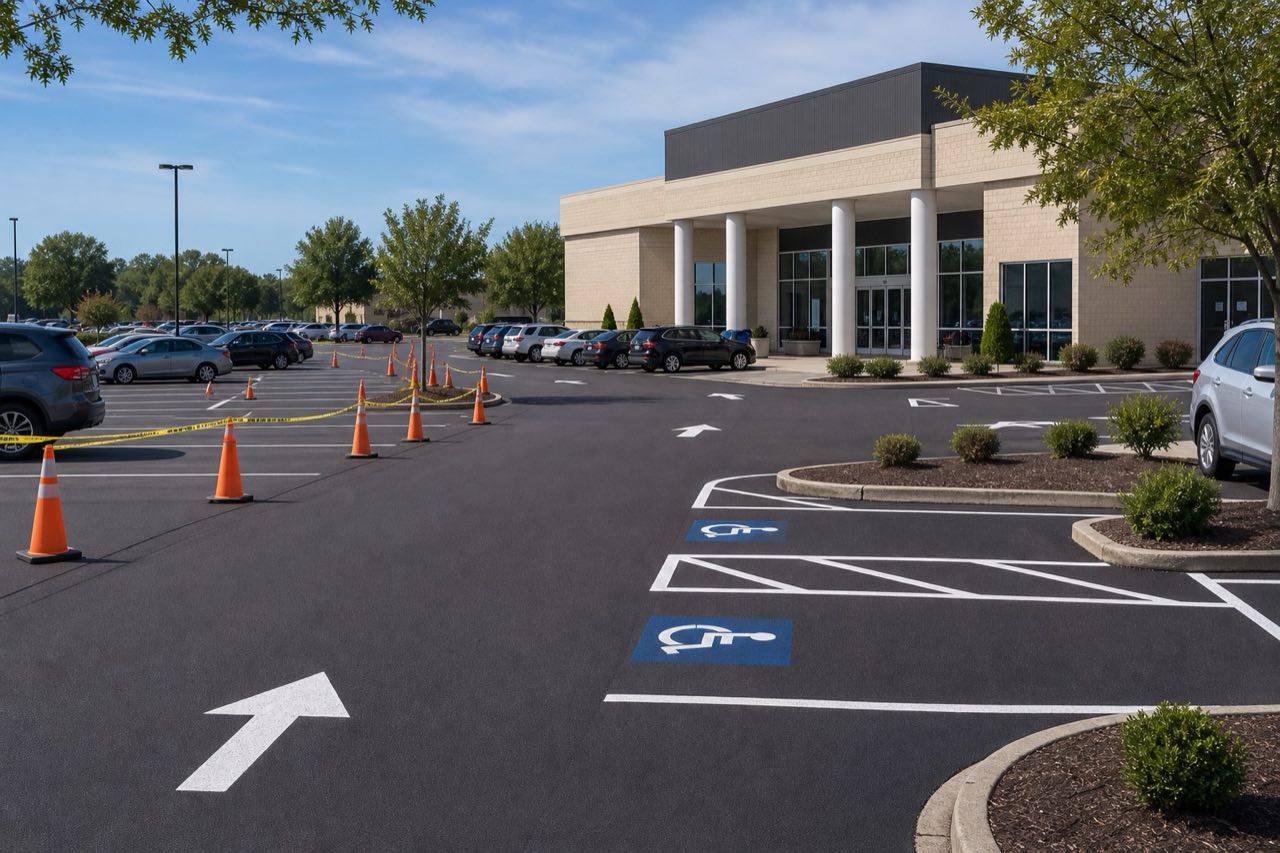
Create a zone drawing with entrances, one-way routes, deliveries, fire access, accessible stalls and paths, loading, waste pickup, employee parking, tenant doors, and temporary signs. State the maximum closure, application and cure sequence, handback inspection, tow policy, communication owner, and weather fallback. If one phase slips, the next phase should not close automatically.
For multifamily or retail, tenant notice needs dates, maps, vehicle-removal deadlines, alternate accessible parking, and a live contact. For showrooms, include freight, installation crews, visitor peaks, and Market setup dates. Night work can reduce disruption but introduces dew, lighting, noise, cure, and morning handback risks that belong in price and method.
How do lifecycle costs change the low-bid decision?
Compare a 3–5 year horizon: current repair, preservation, mobilizations, striping, disruption, likely repeated patches, and the remaining capital event. A $20,000 surface program that postpones a sound overlay can be valuable; the same spend on base-failed pavement can be cosmetic delay. Ask what condition the treatment preserves and what evidence would trigger the next branch.
Use published unit ranges only as checks. Commercial sealcoat references span roughly $0.14–$0.50 per square foot, while repair and reconstruction can be many times higher depending on section depth and site logistics. The provider gives the written quote. Normalize all bids against the same map, quantities, repair depth, coats, phases, markings, and owner responsibilities.
What should happen from estimate through reopening?
A useful commercial engagement starts with records and a daylight walk, then produces a condition map, photo log, measured quantities, treatment branches, operating constraints, phase plan, budget alternates, and a recommended sequence. The crew later executes only the approved zone and scope; the manager controls tenant communication, access, and handback authority.
Weather belongs in the work order. Many sealcoat products call for pavement and air temperatures of at least 50°F with temperatures staying above the minimum during cure, no rain for 24 hours or more, and warmer conditions for dependable drying. Crack and patch materials have their own rules. The vendor should confirm the named product, forecast threshold, postponement decision, and reopening time for the actual date.
What if the pavement reveals a different problem?
When annual patch totals rise, cracks reconnect around repairs, water affects multiple zones, or truck areas deform, update the strategy instead of repeating last year's work order. Measure patch share and failure recurrence. A threshold for overlay or reconstruction review makes the capital request auditable and prevents surface vendors from becoming the default designers of structural work.
Changes should be explicit. The crew should photograph the condition, explain why it falls outside the agreed scope, state the added quantity or alternate treatment, and obtain authorization before proceeding. You may choose the revision, defer that zone, or request another opinion. A surprise beneath dirt is possible; a blank permission slip for unlimited added work is not necessary.
How should you compare written proposals?
Require bidders to use the same marked plan, quantities, repair details, products, application rates, coats, phases, traffic controls, striping counts, schedule assumptions, weather rules, reporting, and alternates. Ask for exclusions and unit prices. The best proposal is the one that makes operational and lifecycle consequences visible, not necessarily the lowest first-year total.
Confirm the actual provider before approval. North Carolina's general-contractor threshold under N.C.G.S. §87-1 is $40,000 for covered projects, so a typical residential sealing price does not prove or disprove qualification by itself. Property rules, scope, and other trades can create different requirements. Verify identity, insurance required by you or the property, references when available, payment terms, and responsibility for the proposed work.