What standards do we use when we discuss a project?
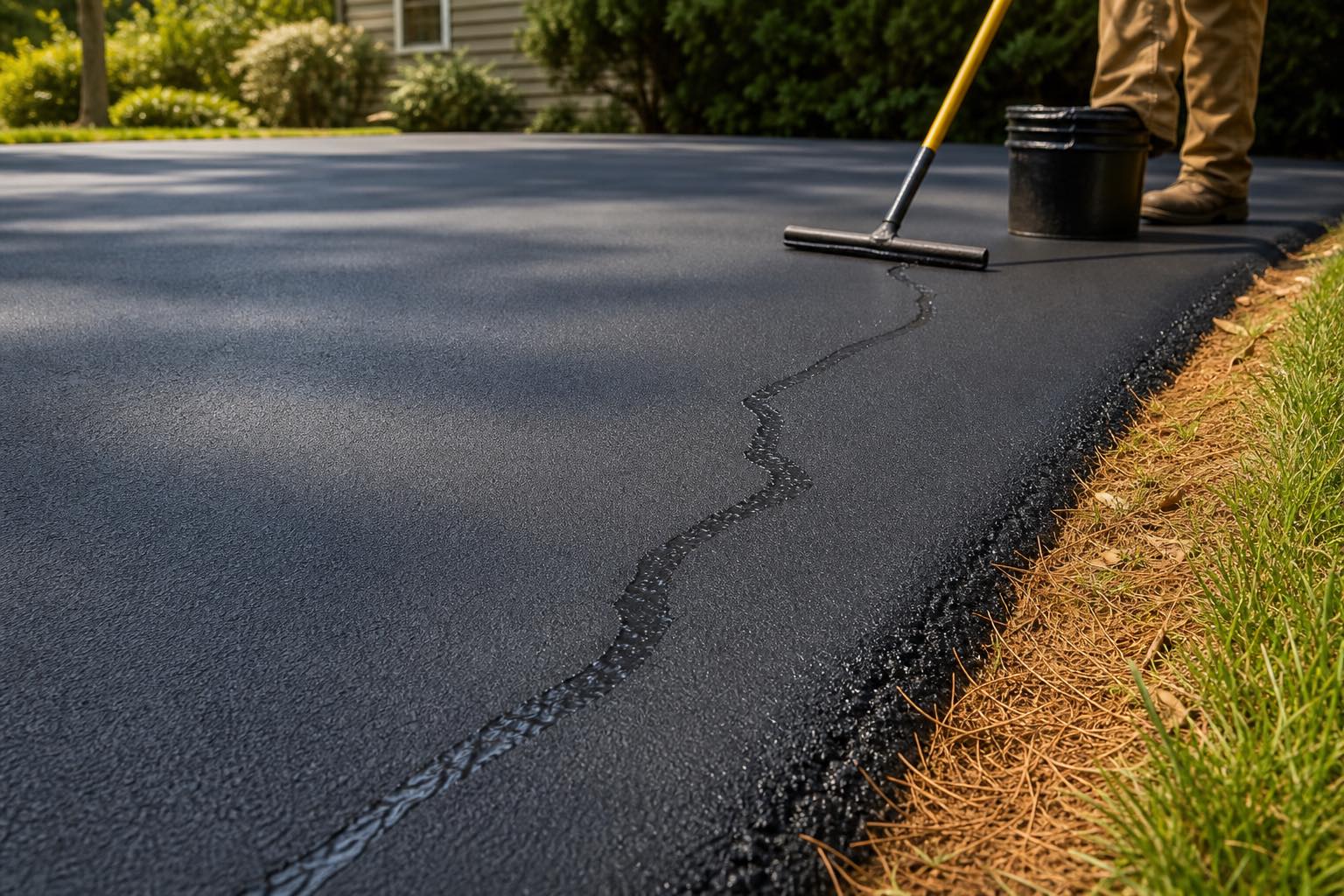
We separate maintenance from repair. Sound, weathered asphalt may be worth sealing. A few suitable cracks may need hot-pour treatment first. A pothole or broken edge calls for a patch discussion. Widespread alligator cracking, rutting, settlement, or drainage failure can move the decision toward an overlay or reconstruction instead of another black coat.
We also separate a price from a scope. National cost bands help detect outliers, but they do not establish a High Point quote. The property dimensions, minimum charge, preparation, crack density, repair area, material, application rate, coat count, traffic plan, and striping determine what 2 proposals actually include.
Why do we discuss coal tar and asphalt emulsion?
Material chemistry is not a niche footnote. USGS research identifies coal-tar-based pavement sealcoat as a major PAH source and measured house-dust PAH concentrations 25 times higher beside coal-tar-sealed lots than beside other pavement types. North Carolina has no statewide ban, so owners need to ask rather than assume.
Our preference is to arrange asphalt-emulsion work, subject to written vendor confirmation for the actual job. The proposal should name the product family, manufacturer instructions, dilution or mix requirements, coverage rate, aggregate or additive system, and application method. A vague promise of premium sealer is not enough information to compare health, environmental, or performance tradeoffs.
What does trust look like without testimonials?
Trust comes from falsifiable detail: a 2–3 year inspection cadence instead of annual overselling; a 24–48 hour common vehicle closure with a weather caveat; a clear explanation that coating cannot fix base failure; and a willingness to recommend no coating when the asphalt is too new or too far gone. Those positions can cost a sale, which is why they are useful.
A careful owner should still verify the actual provider. Ask who will arrive, what company is on the agreement, what qualifications or insurance the property requires, what material will be used, how changes are approved, and who handles cleanup or damage questions. No web page can substitute for reading the agreement with the party doing the work.
Who do we serve?
Homeowners come first because they face the most confusing sales pressure and often have no facilities team to interpret cracks, coats, or chemistry. We also help property managers, HOAs, retailers, offices, showroom operators, and facility teams define work around tenants, deliveries, accessible routes, striping, budgets, and phased reopening.
The service area is High Point, Archdale, Greensboro, Jamestown, Kernersville, and Thomasville. Availability and project fit still depend on the address, pavement, requested scope, crew schedule, and weather. The phone and form are for pavement decisions; do not send payment information, access codes, account numbers, or other sensitive records.