Greensboro's water-first asphalt plan

Asphalt Sealcoating in Greensboro, NC

With about 45 inches of rain across the year and summer thunderstorms, open cracks and drainage deserve attention before the surface is made black.

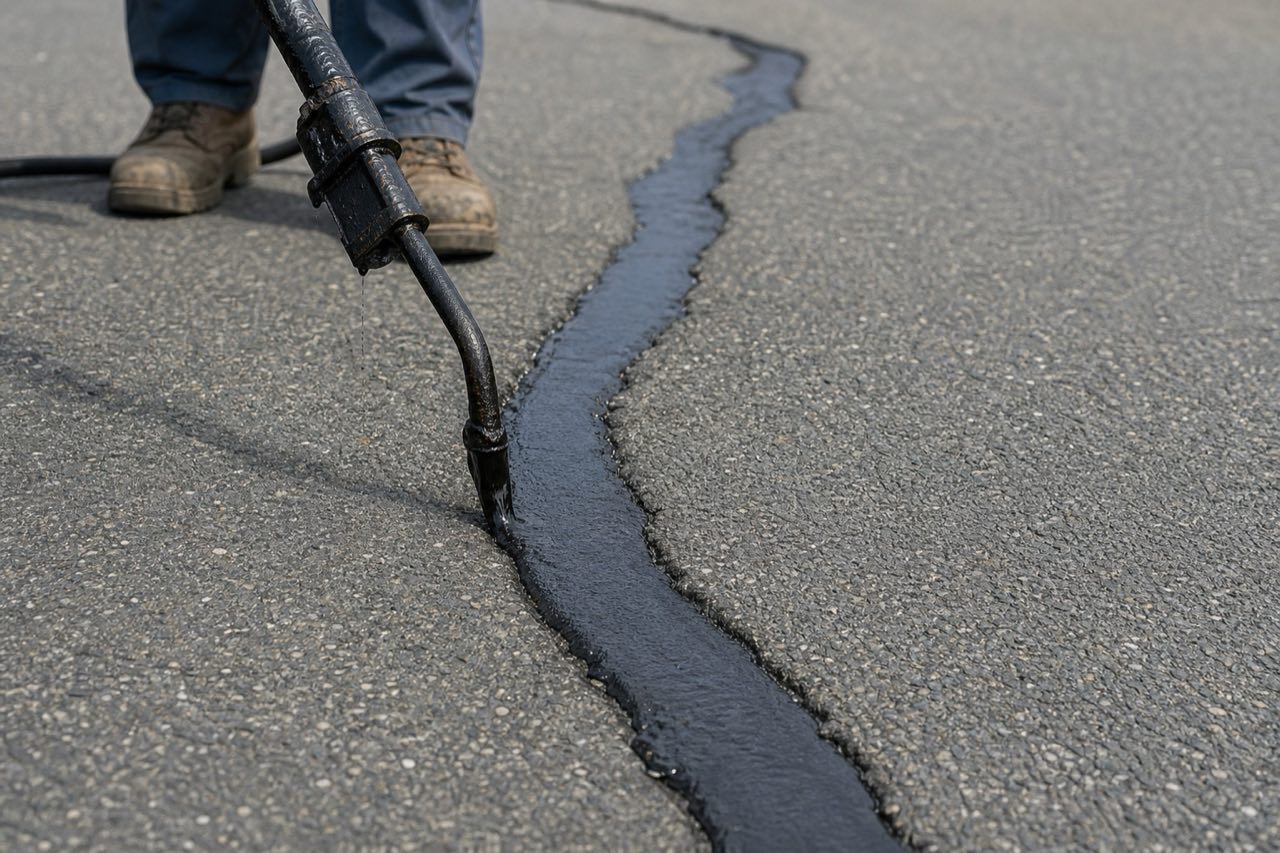
Hot-pour crack treatment reducing a water path through asphalt
2–3 year decision pointInspect condition instead of buying an automatic annual coating.
50°F common minimumThe named product and full cure-period forecast control the actual threshold.
24–48 hour closureCommon vehicle guidance; shade, humidity, coats, and temperature can require 72 hours.

Local facts, property-specific decision

Why does rainfall shape a Greensboro pavement decision?

Greensboro climate data reports roughly 45 inches of rain per year, spread through all seasons, with summer thunderstorm risk. That makes water entry a year-round maintenance question. Sealcoat can reduce exposure on the intact top surface, but a visible crack, low spot, broken edge, or failed patch can carry water below the coat where black color offers no repair.

Winter normals near a 30°F January low also support a cautious freeze-thaw inference: temperatures can move across 32°F, letting water in cracks freeze and expand without requiring a long northern winter. The practical order is drainage and failed-area review, suitable crack treatment, thorough cleaning and drying, then coating only where the asphalt remains structurally sound.

Tell us what the asphalt looks like

Request a Written Quote

Submitting this form allows High Point Sealcoating to send your details to an independent local service provider, who can contact you about scheduling and a written quote.

What should be checked after a Greensboro rain?

Photograph standing water, flow paths, roof and landscape discharge, wet crack networks, eroded shoulders, ponding beside patches, and water emerging through pavement. A dry-day estimate can miss the cause of a repeated pothole. Mark how long puddles remain and whether vehicles push water into an edge or building entrance.

Sealcoat should not be used to regrade a low spot. A localized depression may need patching; a catch-basin, curb, pipe, or broader grading problem may need another scope. Ask the provider to state what it can correct and what remains outside pavement maintenance. The fact pack does not verify a universal red-clay-base explanation, so use site evidence rather than a slogan.

How do Greensboro thunderstorms affect scheduling?

The application date needs a dry surface, a dry forecast for at least 24 hours or the manufacturer's longer requirement, and temperatures that remain above the product minimum through cure. A morning forecast can change by afternoon. The written policy should state who postpones, how late the decision can be made, and what happens if a shower arrives after a phase is coated.

Humidity and shade slow drying even when rain misses the property. Keep irrigation off, check low areas and cracks after cleaning, and avoid opening because the surface merely feels dry to a fingertip. Common published vehicle closures run 24–48 hours; a shaded or humid Greensboro site may need 72 hours. The vendor confirms the actual reopening time.

Which Greensboro cracks should be filled?

Defined transverse, longitudinal, and joint cracks can be candidates for cleaned hot-pour rubberized treatment, often using an ASTM D6690 material. The crew should exclude branching fatigue cracks, loose edges, heaved areas, and water-softened failures. Crack filling matters because it addresses a direct path that surface coating alone cannot bridge reliably.

Ask for linear footage, width range, cleaning and drying method, routing if proposed, material, heating range, fill geometry, traffic protection, and an extra-foot unit price. National July 2026 references span about $0.50–$3.00 per linear foot. That broad range is a comparison only; minimum mobilization and crack condition control the Greensboro quote.

How should Greensboro owners compare sealing costs?

Residential national guides commonly publish about $0.20–$0.65 per square foot for standard work, while commercial references cluster around $0.14–$0.50. Those bands are not a local price sheet. A small driveway can be driven by a minimum; a large lot may lower unit cost but add repairs, phases, traffic control, and striping.

Put rainfall-related preparation into the scope: drying after washing, shaded zones, crack moisture, drainage exclusions, and the rain-cancellation rule. Also compare product chemistry, dilution, coverage, coats, oil treatment, patching, edging, and closure. The vendor provides the written total after measuring the site and seeing areas that directories or aerial square footage cannot reveal.

Questions people actually ask

What else should you know before scheduling?

How much rain does Greensboro get in a year?

Published climate data used in the fact pack reports about 45 inches annually, distributed across the seasons. That figure does not predict a specific project week, but it explains why cracks, drainage, drying, and a rain-cancellation policy matter. Inspect after rainfall, then schedule coating only on dry pavement with the product's required forecast window.

Can a summer thunderstorm ruin fresh sealcoat?

Rain before the coating has cured can wash, spot, dilute, or carry material, especially from low areas and edges. Require at least the manufacturer's rain-free interval—commonly 24 hours or more—and a written postponement policy. If an unexpected shower arrives, keep traffic out, photograph the surface, and let the vendor inspect before authorizing a cosmetic touch-up.

Does Greensboro freeze-thaw really affect asphalt?

Winter normals near a 30°F January low support the inference that temperatures can cross 32°F. Water inside an open crack can freeze, expand, and contribute to widening even without months of deep cold. That is why fall crack review is useful. It does not mean every crack is fillable or that freeze-thaw is the only cause.

What should a Greensboro quote say about wet pavement?

It should require a dry surface and cracks, identify washing and dry-time assumptions, control sprinklers or other water, state the temperature and rain threshold, and explain cancellation or rescheduling. A center lane can be dry while a shaded edge remains damp. The provider should confirm readiness immediately before application rather than relying only on hours since rain.

A written scope before the work

Ready to decide what the asphalt actually needs?

Call High Point Sealcoating or send the form. We will arrange the conversation, and the service provider will confirm the work, weather plan, and price before you approve anything.

(336) 705-6990