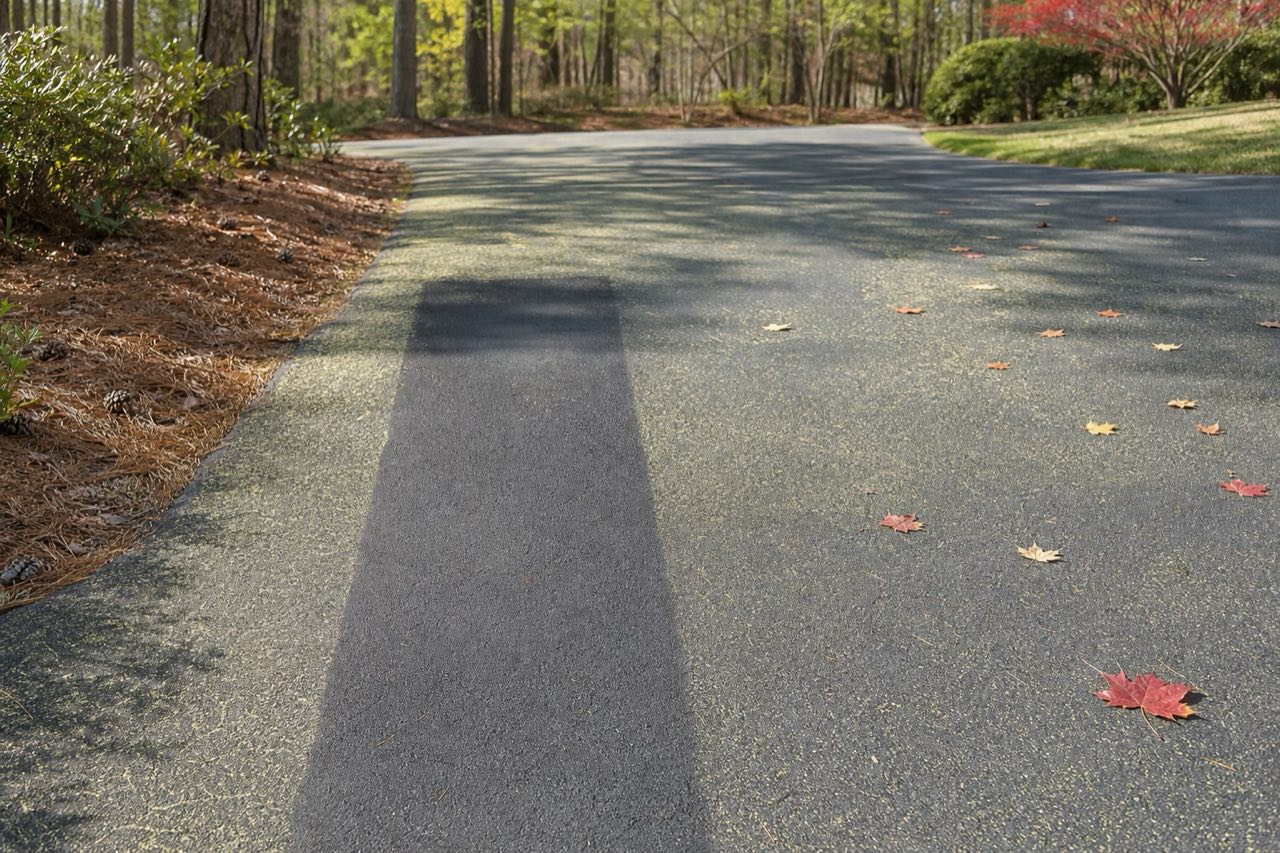
What should be removed before sealer arrives?
Blow and sweep loose aggregate, soil, leaves, needles, pollen, grass, and litter. Cut back vegetation at the asphalt edge rather than coating over it. Scrape unstable old filler or coating where required. Clean cracks separately so the sealant bonds to their walls. Commercial lots also need attention at curbs, wheel stops, islands, loading zones, dumpster pads, and areas hidden by parked cars.
Oil spots require diagnosis. A surface stain may accept a compatible primer or spot treatment; asphalt softened by petroleum can need removal and patching. Pressure washing can help some dirt, but the pavement must dry fully and dirty water must not be driven into cracks or storm drains. The proposal should name cleaning methods and who handles captured debris or residue.
How do you know the pavement is dry enough?
The surface should be visibly dry, cracks should not hold water, shaded zones should be checked separately, and recent washing or rain should have enough evaporation time. A sunny center lane can dry while a tree-lined edge stays damp. Product instructions govern the final threshold; scheduling by the clock alone ignores humidity, shade, pavement porosity, and overnight dew.
Watch irrigation and roof drainage. A sprinkler cycle the morning of application can wet edges after the crew has cleaned them. Downspouts, condensate, leaking dumpsters, or landscape runoff can create local bond failures even during a dry forecast. Shut off avoidable water sources and identify persistent wet areas before the coating phase is authorized.
What does cleaning add to a July 2026 quote?
Angi's 2026 guide publishes a power-washing add-on around $0.27–$0.39 per square foot as one national comparison, but washing is not the only preparation method and that band is not a High Point rate. Blowing, mechanical sweeping, scraping, vegetation work, detergent or primer, drying time, debris handling, and extra mobilization create different costs.
Ask the base quote to state included preparation and provide units for heavy cleaning, oil treatment, edge cutting, vegetation removal, or a return visit after washing. A low sealing price that says surface by others shifts the most important quality step back to the owner. The vendor confirms the written preparation charge after parked cars and hidden areas are cleared for inspection.
What should happen from estimate through reopening?
The crew first clears access and inspects the surface in full light. It separates repair and contamination zones, protects drains and adjoining materials, performs the agreed blowing, sweeping, scraping, vegetation, spot, or wash steps, cleans cracks, allows full drying, reinspects for loose material and moisture, and only then releases the pavement for crack treatment or coating.
Weather belongs in the work order. Many sealcoat products call for pavement and air temperatures of at least 50°F with temperatures staying above the minimum during cure, no rain for 24 hours or more, and warmer conditions for dependable drying. Crack and patch materials have their own rules. The vendor should confirm the named product, forecast threshold, postponement decision, and reopening time for the actual date.
What if the pavement reveals a different problem?
Random bare islands, peeling sheets, or a coat that lifts with dirt attached can indicate preparation or moisture failure. Uniform wear in wheel paths is different. Save photos before cleaning, after cleaning, and after failure; note rain, sprinklers, shade, temperature, and traffic timing. That evidence is more useful than applying another coat over the same contaminated layer.
Changes should be explicit. The crew should photograph the condition, explain why it falls outside the agreed scope, state the added quantity or alternate treatment, and obtain authorization before proceeding. You may choose the revision, defer that zone, or request another opinion. A surprise beneath dirt is possible; a blank permission slip for unlimited added work is not necessary.
How should you compare written proposals?
A preparation scope should identify access clearing, blowing, mechanical sweeping, washing, degreasing limits, primers, scraping, vegetation edges, crack cleaning, drain protection, debris disposal, dry-time verification, repair exclusions, and who approves readiness. If the sealer crew controls preparation, the agreement should not disclaim every bond problem as owner dirt.
Confirm the actual provider before approval. North Carolina's general-contractor threshold under N.C.G.S. §87-1 is $40,000 for covered projects, so a typical residential sealing price does not prove or disprove qualification by itself. Property rules, scope, and other trades can create different requirements. Verify identity, insurance required by you or the property, references when available, payment terms, and responsibility for the proposed work.